

 sales:
  sales:





 Cloud & on-premises CRM
 Point of Sale (POS)
 Taskwave Field Service ERP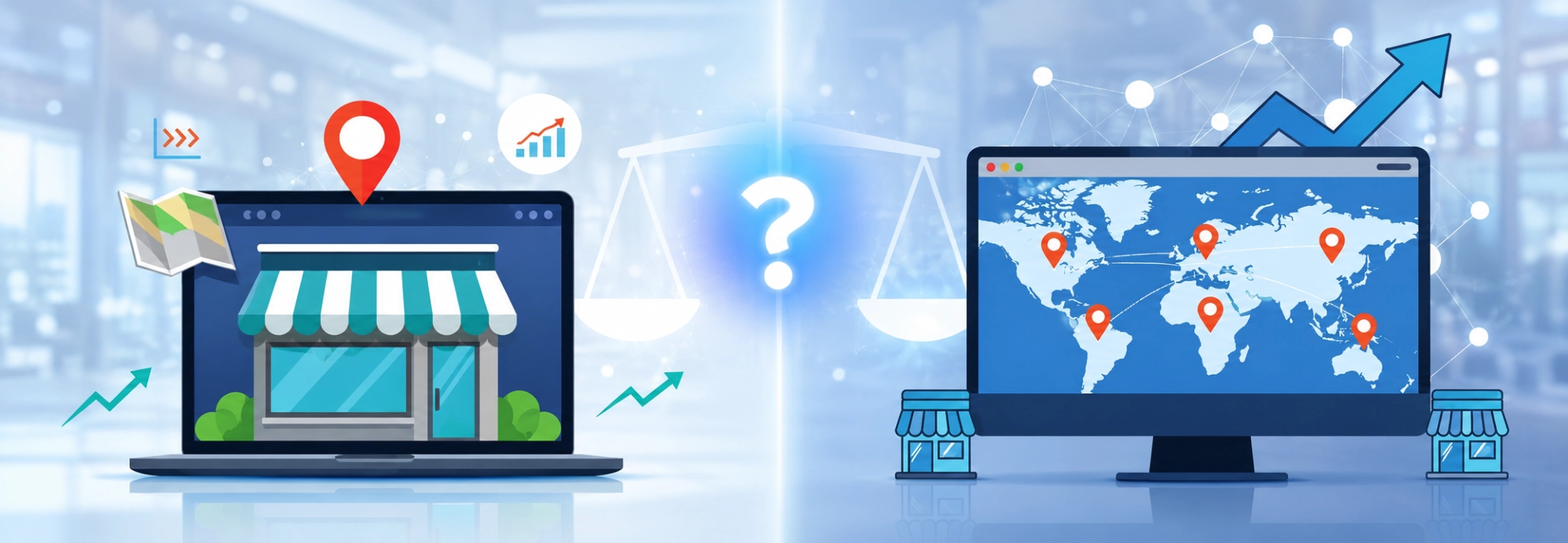
As your franchise brand grows, one of the biggest digital marketing questions you’ll face is how to structure your online presence across multiple locations that will yield the best results for your brand and your franchisees on a local level.
Should each franchisee have a dedicated page on the main corporate website? Or should each location have its own local website?
There is no one-size-fits-all answer, but the choice matters. The structure you choose can impact local visibility, franchisee engagement, SEO performance, brand control, lead generation, and long-term scalability.
In this article, we’ll break down the difference between dedicated webpages and local sites, along with the pros and cons of each approach.
What Are Dedicated Location Webpages?
A dedicated location webpage is a page created for an individual franchisee or location on the main corporate website.
For example, the URL may look something like:
yourbrand.com/locations/denver
This approach keeps all franchise locations under one primary corporate domain. The franchisor usually controls the layout, branding, content structure, and access. In some cases, franchisees may be able to request edits or provide local details, but they typically do not manage the page themselves.
Dedicated webpages are often built from a template. This makes them easier to launch and easier for the franchisor to control, but it can also limit how much each location can personalize its page for its local market.
Pros of Dedicated Webpages
One of the biggest advantages of dedicated webpages is simplicity. Since all location pages live on the corporate website, the franchisor has more control over brand consistency, messaging, design, and compliance.
This can be especially helpful for newer franchise systems or brands that are concerned about franchisees publishing off-brand content, using incorrect messaging, or making unauthorized website changes.
Dedicated webpages also tend to have a lower monthly cost compared to maintaining separate local websites for each franchisee. For brands that are trying to keep technology costs lean, this can be appealing.
Another benefit is that all traffic contributes to the main corporate domain. If the corporate site already has strong authority, location pages may benefit from that existing trust.
Cons of Dedicated Webpages
The downside is that localization can be challenging.
A single location page may not be enough to fully represent what a franchisee does in their specific market. Many local businesses need more than a basic page with a name, address, phone number, service area, and a short description.
They may need local service pages, local blog content, city-specific landing pages, project examples, local FAQs, community involvement, customer stories, and market-specific offers.
When everything has to go through the franchisor, updates can become slow. Franchisees may not have the ability to quickly publish timely content, promote local events, respond to local trends, or expand their web presence in a meaningful way.
This can create frustration for franchisees who want to grow their business locally but feel limited by a single page they cannot access or control.
In many cases, dedicated webpages work well as a basic location finder, but they may not be enough to support serious local SEO growth or power ambitious paid campaigns.
What Are Local Franchise Websites?
A local franchise website gives each franchisee their own website for their specific market.
For example, the URL may look something like:
yourbrand-denver.com
or
denver-yourbrand.com
These sites are still part of the overall brand network, but they give each location more room to build a strong local presence.
A local site can include pages for specific services, service areas, local blogs, reviews, team information, community involvement, project galleries, FAQs, and local calls to action.
Instead of trying to fit everything into one page, the franchisee has a full website designed to support their local business.
Pros of Local Websites
The biggest advantage of local websites is localization. Each franchisee serves a unique market, and a local website gives that location the space to speak directly to its customers, community, and service area.
A franchisee in Denver, Colorado may serve a very different audience than a franchisee in Miami, Florida or Charlotte, North Carolina. Their customers may have different needs, different search behavior, different seasonal concerns, different competitors, and different reasons for choosing one provider over another.
A local website allows each franchisee to build content around those differences. This is especially valuable for SEO because local sites can be optimized around location-specific keywords, service-area pages, local blog topics, customer questions, reviews, and neighborhood-level search intent.
It is also becoming increasingly important for AI recommendations and Answer Engine Optimization. When someone asks an AI tool for a local recommendation, the system looks for clear, trustworthy, locally relevant information. A local website gives each franchisee more opportunities to provide those signals through detailed service pages, location-specific FAQs, customer-focused content, reviews, business information, and consistent connections to other brand assets.
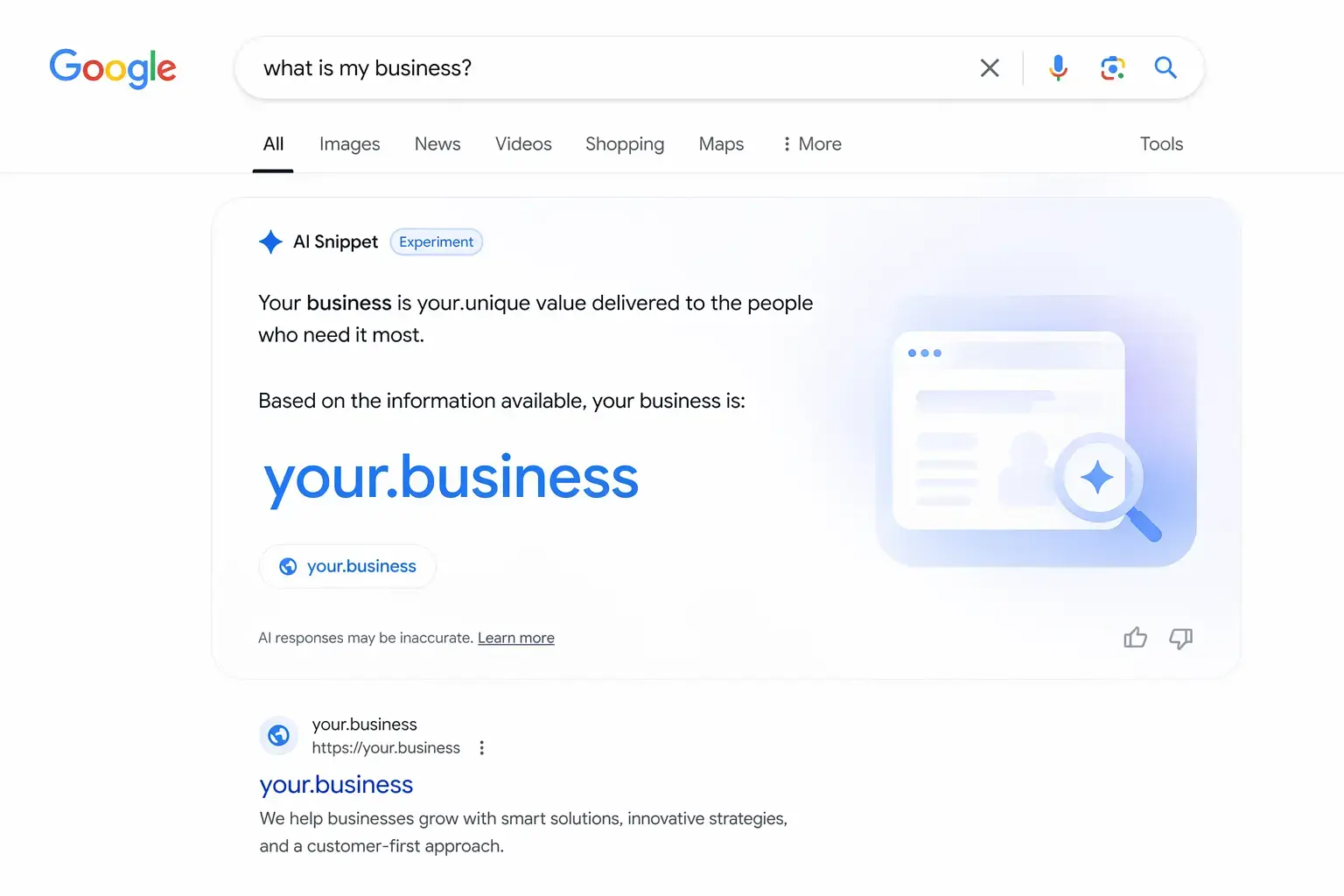
In other words, a strong local site does not just help a franchisee show up in traditional search. It also helps answer engines better understand who the business serves, what it offers, where it operates, and why it may be a good recommendation.
Local websites also allow franchisees to publish content that is relevant to their community. This could include local promotions, events, partnerships, customer stories, project highlights, seasonal tips, or educational content based on what customers in that market are actually asking.
Another important benefit is franchisee ownership. When franchisees can see and influence their own digital presence, they are often more engaged in marketing. They are not just listed on a corporate website. They have a platform that represents their local business and gives them a stronger role in building their local reputation.
Local websites also support network growth. When local sites are properly connected to the corporate website and other approved brand assets, the brand begins to build a larger digital footprint. Every new local website adds another strong, relevant presence to the brand network.
This creates a “Wikipedia effect,” where the corporate site and local sites support one another through smart structure, internal linking, shared brand authority, and consistent information across the web. As the network grows, so does the brand’s overall visibility in search engines, local results, and AI-powered recommendations.
Cons of Local Websites
Local websites do require more management.
Because franchisees have more flexibility, the franchisor needs the right systems, permissions, templates, and oversight in place. Without proper controls, there is a risk of inconsistent branding, outdated content, poor-quality pages, or franchisees making changes that do not align with the brand.
There may also be a higher monthly cost compared to a single location page on the corporate site. Each local website needs hosting, maintenance, updates, SEO support, reporting, and content management.
However, the additional cost should be weighed against the potential upside: stronger local visibility, more leads, better franchisee engagement, and a more scalable brand presence.
For many growing franchise systems, local websites are not just an expense. They are a growth asset.
Which Option Is Best?
Dedicated webpages can be a good starting point for franchise brands that are early in their growth, working with a smaller budget, or prioritizing strict brand control.
They are simple, affordable, and easier to manage from the corporate level.
However, as a franchise network grows, local websites often provide a stronger foundation for long-term local marketing success.
A dedicated webpage can tell people a location exists. A local website can help that location compete.
For franchisees who need to rank in local search, publish content, promote services, build trust, and generate leads in their own markets, a full local website offers far more opportunity.
The Best Approach May Be a Connected Brand Network
The strongest strategy is not always choosing between the corporate website and local websites. It is making sure they work together.
The corporate website should remain the trusted home base for the brand. It should explain the brand story, franchise opportunity, core services, national credibility, and location network.
Local websites should support individual franchisees with market-specific content, service pages, local SEO, customer engagement, and lead generation.
When structured correctly, the corporate site and local sites do not compete with each other. They strengthen each other.
The result is a more powerful brand network, better local visibility, and a stronger digital foundation for every franchisee in the system.