
 sales:
  sales:





 Cloud & on-premises CRM
 Point of Sale (POS)
 Taskwave Field Service ERP
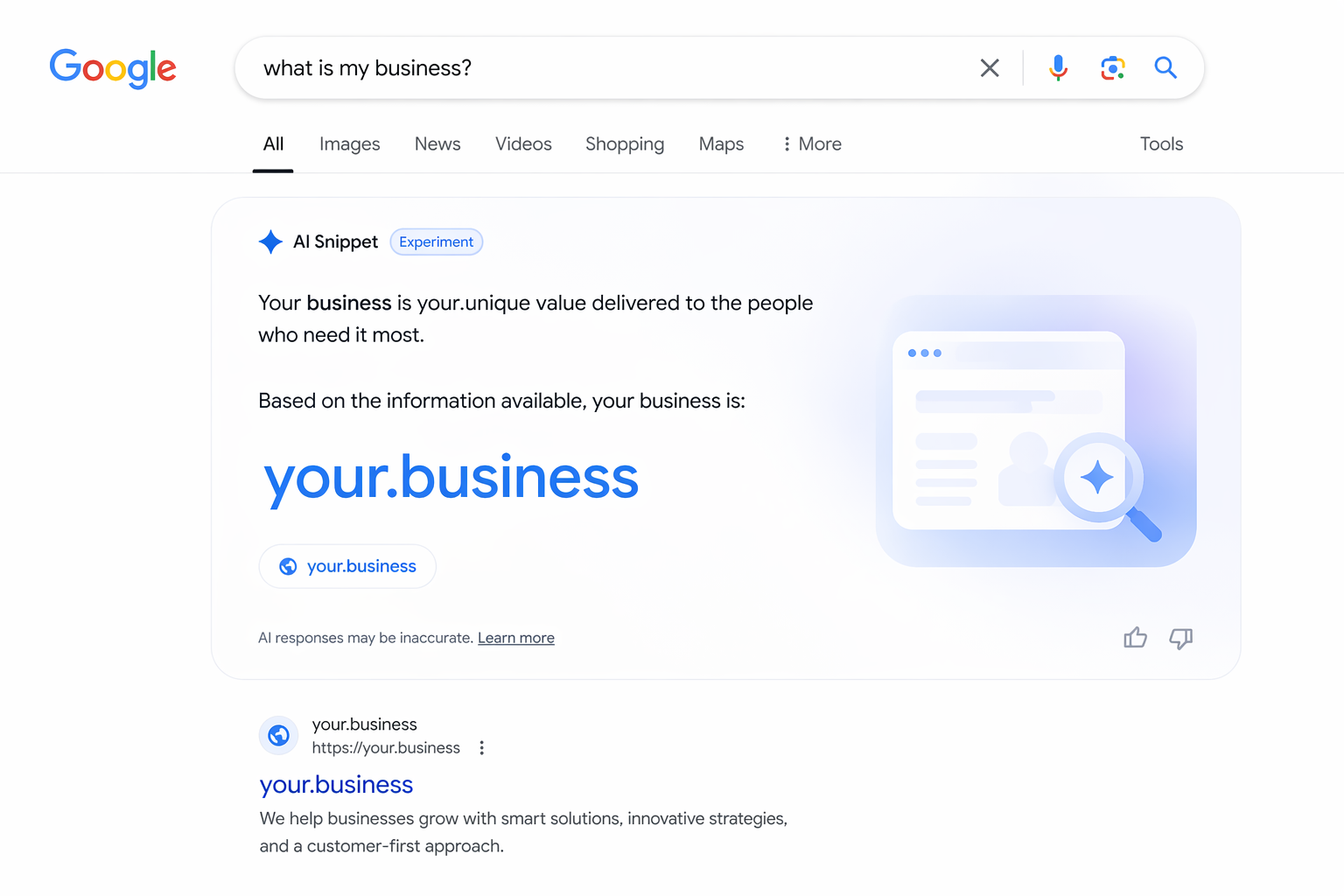
More businesses are starting to notice a strange gap in how they appear online. They may rank well in traditional search engines, have strong SEO visibility, and even invest heavily in content marketing, yet when they search for their own services through AI tools or conversational interfaces, their brand often doesn’t appear in the response at all.
Instead, competitors are mentioned, generic answers are provided, or in some cases, no clear recommendation is made. This creates a new kind of visibility problem that is not about rankings in the traditional sense, but about whether a brand is actually included in AI-generated answers.
This shift is happening because systems like Google search experiences and conversational AI models no longer rely solely on listing websites. They synthesize answers based on structured signals, entity understanding, and perceived authority across multiple sources. This means that being present in search results is no longer sufficient. A brand must also be structured in a way that allows AI systems to confidently interpret, reference, and include it when generating answers.
The challenge for many companies is that their digital presence is still built around a traditional SEO model. Pages are optimized for keywords, content is created for rankings, and success is measured in clicks and impressions. However, AI systems operate differently. They are less concerned with isolated pages and more focused on understanding relationships between entities, topics, and trust signals.
|
This is why visibility in AI-driven environments is increasingly uneven. Two businesses with similar SEO performance can experience completely different levels of exposure in AI answers depending on how structured their data, content, and authority signals are.
One may be consistently referenced in responses, while the other is effectively invisible, despite strong traditional rankings. The difference is not always content quality, but how well the brand is interpreted by systems designed to summarize and recommend rather than simply index.

What makes this particularly important is that user behavior is starting to shift toward these AI-driven interfaces as a first point of discovery. Instead of browsing multiple search results, users are asking direct questions and expecting synthesized answers. In that environment, inclusion becomes more important than ranking position. If a brand is not part of the AI-generated response, it is effectively excluded from consideration at the moment of decision-making.
Addressing this requires a different approach to visibility. It is no longer enough to optimize individual pages or campaigns in isolation. Brands need a structured visibility layer that ensures their data, content, and authority signals are consistently interpretable by AI systems. This includes how information is organized, how entities are defined, and how signals are connected across the digital ecosystem.
This is where platforms like SeoSamba begin to play a role, not as traditional marketing tools, but as infrastructure for visibility. By unifying marketing data, structuring content signals, and connecting performance across channels, they create a foundation that helps ensure a brand is not just present online, but also understandable and usable by AI-driven systems.
The key shift is conceptual. Visibility is no longer just about being found. It is about being selected. And in AI-generated environments, selection is based on structure, consistency, and clarity of signals rather than just volume of content or keyword optimization. Brands that recognize this early are already beginning to adapt their digital presence accordingly, while others continue to operate under assumptions that no longer fully apply.
Ultimately, the question is no longer whether a brand ranks well in search results, but whether it can be reliably interpreted and included in AI-generated answers. And that distinction is quickly becoming one of the most important factors in digital visibility.
FAQ
Why does my business rank well in search engines but not appear in AI-generated answers?
What determines whether a brand is included in AI-generated responses?
- Structured data consistency
- Entity recognition (who you are, what you offer)
- Authority and trust signals across platforms
- Content relationships, not just individual pages