
 sales:
  sales:





 Cloud & on-premises CRM
 Point of Sale (POS)
 Taskwave Field Service ERP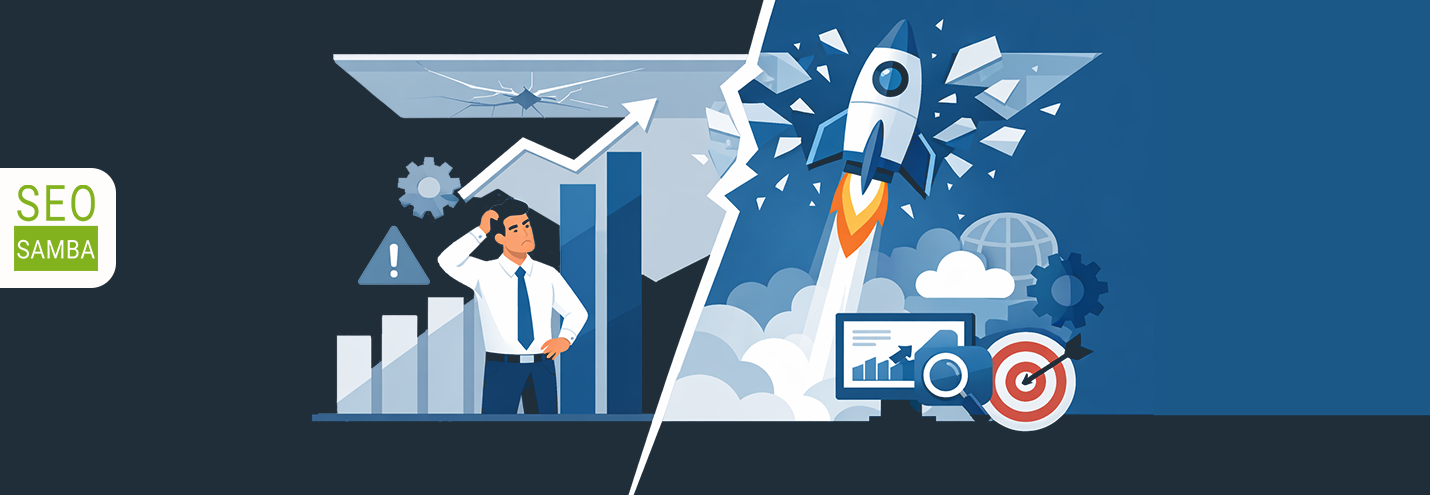
Your clients don't have an AI problem. They have a marketing infrastructure problem. And until you solve it for them at scale, under your brand, your agency will keep trading hours for dollars while margins quietly erode.
Every ambitious agency owner hits the same invisible wall. Revenue plateaus. Margins thin. The team burns out on support tickets and manual reports instead of doing the work that actually moves clients forward. Hiring more people helps, until it doesn't. The ceiling isn't a people problem. It's an infrastructure problem.
The good news: infrastructure is solvable. And the agencies that solve it first aren't just growing faster, they're compounding, building assets, and creating the kind of embedded client relationships that produce negative churn.
This guide breaks down exactly what's breaking your agency, why most "AI solutions" make things worse before they make them better, and what a real agency operating system looks like when it's built right.
The AI promise is failing, and your clients are paying for it
Generative AI was supposed to change everything. For many agencies and their clients, it has just not been in the direction anyone expected. Estimates suggest that 80% to 95% of AI projects fail to deliver on their intended promises, with a significant share of generative AI pilots never reaching production or showing measurable ROI.
- 80–95% of AI projects fail to deliver measurable ROI
- $0 ROI from great AI running on broken infrastructure
- 3 root causes: poor data quality, strategic misalignment, cultural resistance
These failures aren't caused by bad AI models or underskilled teams. They're driven by poor data quality, strategic misalignment, and cultural resistance, all symptoms of the same underlying condition: a broken marketing infrastructure.
"Your clients don't have an AI problem. They have a marketing infrastructure problem. Deliver the infrastructure required for AI success, and negative churn will be one of the rewards." - Michel Leconte, CEO
When you lead a client engagement with AI tools before solving infrastructure, you're installing a high-performance engine into a car with no wheels. The engine looks impressive in demos. Nothing actually moves. Your agency absorbs the blame.
The seven silent killers of agency growth
Before you can build the right operating system, you need to name what's actually breaking. Most agency owners can feel these problems, they just don't always have words for them.
Read those right-column entries again. These aren't inconveniences. They are the specific mechanisms by which your agency's ceiling gets built, brick by brick, quarter by quarter.
The agency operating system: what the real solution looks like
The answer isn't another point solution or another AI tool bolted onto a fragile stack. It's a unified operating system: six interconnected pillars that transform how your agency delivers, scales, and retains clients over time.
Reporting engine
Data consolidated, automated, and AI-assisted so monthly reports take minutes, not days. Clients see complete pictures. You look indispensable.
Broad & deep bench
A talent and capability layer that lets you seize better, larger opportunities without betting the business on one expert's availability.
Technical support layer
Processes run themselves. A dedicated helpdesk shields your team while you focus on growth, not on explaining how to reconnect an integration.
Repeatable service templates
Proven playbooks that let you scale profitable services without taking on proportional risk every time a new client signs.
White-label operational layer
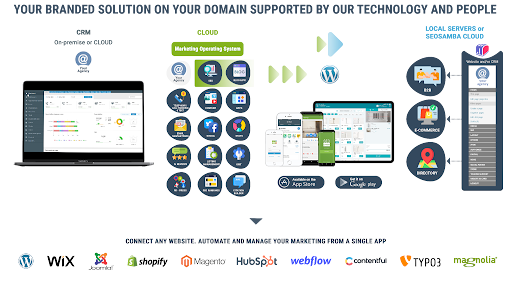
Your agency infrastructure, your software pricing, your brand. Control the tools your clients use and capture the recurring revenue that comes with it.
Strategic relationship deepening
Software that ties client operations, marketing, and sales together with your agency at the center. Mission-critical, not optional. When all six are operating together, something remarkable happens: your clients don’t want to leave, because they saw the delivered value. That's the mechanism behind negative churn.
Negative churn is the real growth strategy
The agency industry talks obsessively about acquisition. The most successful agencies have learned to focus on retention, specifically, on growing client revenue faster than it churns out.
Negative churn occurs when expansion revenue from existing clients outpaces cancellations. An agency with even modest negative churn can grow year-over-year without signing a single new account.
Stack new clients on top of that, and you have the compounding engine that separates category-defining agencies from the ones permanently stuck in the feast-or-famine cycle.
Not "How do we retain clients?" but "How do we become so operationally integrated that leaving us means losing a business-critical system?" The answer is the operating system model.
SeoSamba also supports agencies before the sale even happens. We work alongside your team during the sales process to help you close more deals with confidence. That includes running detailed audits so you can bring real data into prospect conversations, coaching your sales staff on positioning and pitching, and helping you craft clear proposals that communicate value effectively. We also build prototypes that let clients see exactly what they are getting, so your team can walk into any RFP fully prepared.
From that point, the platform continues well beyond the sale. You get fully white-labeled software under your own brand, reporting that clients begin to depend on each week, and structured support processes that their internal teams are trained to follow. It all operates within your agency’s environment rather than sitting alongside it as a separate tool. As this level of integration deepens, the conversation naturally changes.
Free Resource: 60 Statistics on Reputation Management
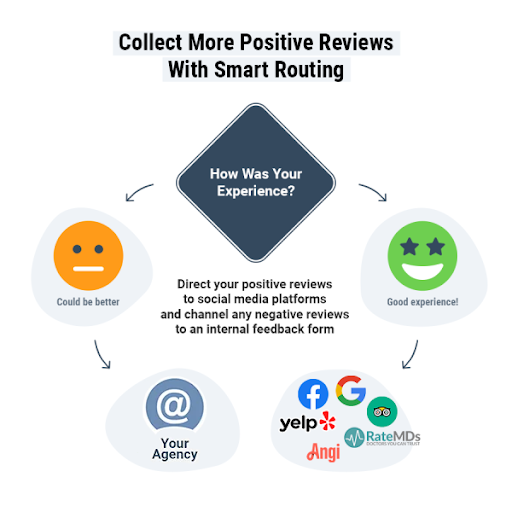
Reputation is the foundation of every agency-client relationship, and one of the most powerful retention levers you have. We've compiled 60 data points every growth agency should know before the next client conversation.
How to start building the infrastructure layer?
Step 1: Audit your stack for fragmentation
List every platform your clients' data lives in. Count how many manual steps it takes to produce one monthly report. If the answer is more than two, your reporting is fragmented. That's your first fix, and the one with the fastest visible ROI.
Step 2: Map where your team's time actually goes
Break down a typical work week by function: strategy, execution, reporting, support, admin. Most agency leaders are shocked to find fewer than 30% of hours go toward value-generating work. The rest is infrastructure maintenance, subsidized by your margins.
Step 3: Identify which client tools you don't control
Every SaaS subscription a client pays directly is a relationship you don't own. Build a list. Then ask: which of these could sit under a white-label platform you control? That list is your recurring revenue roadmap.
Step 4: Build one repeatable service template
Pick your highest-margin service. Document every step from onboarding to monthly delivery. Systemize it so a new team member can run it at 80% quality on day one. That template is the seed of a scalable business. Replicate it across every service line you offer.
Step 5: Choose a platform designed for the operating system model
The difference between agencies that break through the ceiling and agencies that don't usually comes down to one structural decision: whether they're building on a platform designed for this model, or assembling it from individual tools that were never meant to work together. Duct-taped stacks hit ceilings. Integrated platforms compound.
SeoSamba: the operating system for growth agencies & their clients
SeoSamba is a white-label marketing platform built for exactly this model. Consolidated multi-location reporting, AI-assisted campaign automation, a full helpdesk and support layer, repeatable service templates, and client operations tools, all under your brand, your pricing, all in one place.
Agencies using SeoSamba don't just deliver marketing services. They become the marketing infrastructure their clients run on. That's what transforms a service business into a compounding, defensible enterprise with genuine negative churn.
Frequently Asked Questions
What is marketing infrastructure for agencies?
Why do most marketing agencies struggle to scale past a certain point?
What is the agency operating system?
How does white-label marketing software help agencies grow?
Why do most AI and generative AI projects fail?
What is negative churn and how do agencies achieve it?
How does SeoSamba help marketing agencies build infrastructure?
SeoSamba is a white-label marketing platform built specifically for the agency operating system model. It provides consolidated multi-location reporting, AI-assisted campaign automation, a helpdesk and client support layer, repeatable service templates, and tools that integrate client operations, all under the agency's own brand.
Agencies use SeoSamba as the technology foundation beneath their services, delivering more, differentiating clearly, and building sticky client relationships that generate negative churn.
The agencies winning right now aren't the ones with the best creative or the deepest AI knowledge. They're the ones that built the operational infrastructure to deliver consistently, scale profitably, and embed themselves so deeply in client operations that walking away isn't a realistic choice.
The ceiling every agency hits is an infrastructure ceiling. The solution is the agency operating system, and the platform built to run it is SeoSamba.
If your clients are struggling to get ROI from AI tools, if your team spends more time on support than on strategy, if your reports take days and your margins are thinning, you're not facing a talent problem. You're not facing a technology problem. You're facing an infrastructure problem. And infrastructure problems, unlike many things in business, have clear and buildable solutions.