

 sales:
  sales:





 Cloud & on-premises CRM
 Point of Sale (POS)
 Taskwave Field Service ERP
The latest update from Google on summer travel is not just a set of helpful consumer tips — it’s a signal of a much deeper shift in how discovery, decision-making, and ultimately brand visibility now work in an AI-first search environment.
In its recent feature rollout, Google showcases how travel planning is rapidly evolving from fragmented searches into guided, AI-orchestrated journeys. With tools like AI Mode, users can now generate complete itineraries from a single prompt, refine them conversationally, and visualize options across flights, hotels, and local experiences in one continuous interface.
This is not incremental UX improvement — it’s the replacement of traditional search behavior with an agentic layer that interprets intent, curates outcomes, and reduces the need for users to browse multiple websites.
At the same time, features like real-time hotel price tracking, automated restaurant booking, and even AI-assisted calls to local businesses demonstrate how Google is collapsing the entire travel funnel — from inspiration to transaction — into its own ecosystem.
What used to be a multi-touch journey across brand websites, directories, and aggregators is becoming a single, AI-mediated experience where only a handful of structured, trusted, and machine-readable entities surface.

This aligns with broader behavioral data: interest in “AI travel assistants” and “AI concierge” solutions has surged dramatically, reflecting a consumer expectation that planning should now be done for them, not by them. In this new paradigm, visibility is no longer about ranking for keywords — it’s about being selected by AI systems as a relevant, authoritative, and structured answer.
For franchise brands, this shift is both an opportunity and an existential challenge.
The opportunity lies in scale: AI systems favor brands that can provide consistent, structured, and semantically rich data across locations. A well-orchestrated franchise network can dominate AI-generated recommendations — if its data, content, and operational signals are unified and machine-readable.
The challenge is that most brands are not architected for this reality. Their digital presence is fragmented across CMS platforms, CRMs, ad systems, local listings, and third-party tools. As AI intermediaries like Google’s Search evolve into decision engines, fragmented brands become invisible brands.
This is where the role of an AI infrastructure layer becomes decisive.

A Franchise Marketing OS represents precisely the kind of foundation required to compete in this new landscape. By unifying content management, CRM data, local business signals, and marketing automation to automatically deploy schema based entities and optimized content to websites into a single operational layer, it enables brands to do what AI systems increasingly demand: provide coherent, structured, and continuously updated data across every touchpoint.
More importantly, such an infrastructure allows brands to move from reactive marketing to signal orchestration. Every interaction — website updates, customer reviews, transaction data, campaign performance — feeds into a centralized intelligence layer that can be exposed, structured, and optimized for AI discovery engines.
In a world where Google’s AI is building the itinerary, making the reservation, and recommending the brand, the winners will not be those who simply “do SEO better.” They will be those who are architected to plug into these AI ecosystems with clarity, consistency, and authority.
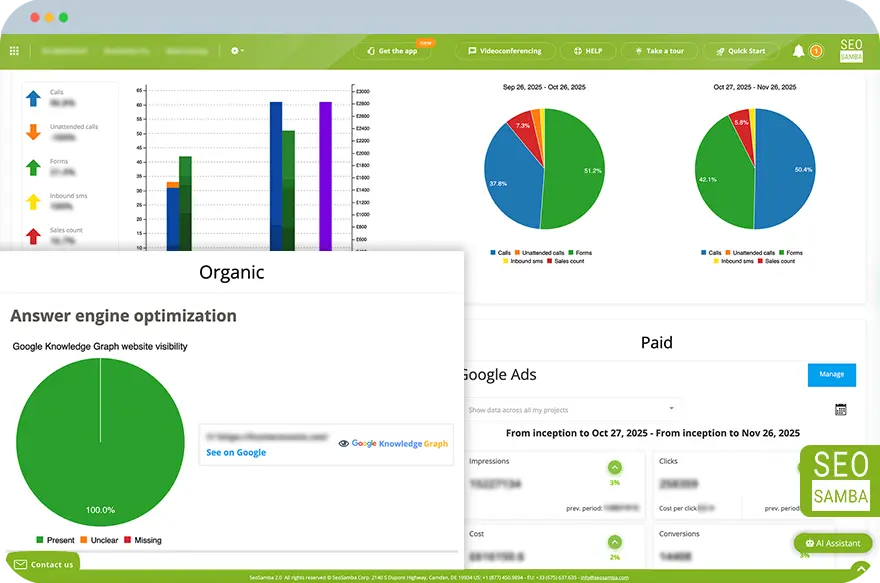
The takeaway for franchise marketers is clear: the battleground has shifted from search rankings to AI selection. And without a unified AI-ready infrastructure, even the strongest brands risk being bypassed — while more structured, better-connected competitors are surfaced, recommended, and ultimately chosen.