
 sales:
  sales:





 Cloud & on-premises CRM
 Point of Sale (POS)
 Taskwave Field Service ERP
AI can finally make franchise SEO scalable. But if the strategy is simply to generate the same optimized page hundreds of times, brands may be solving the wrong problem.
For years, franchise and multi-location brands have faced the same fundamental SEO challenge: how do you create a consistent national brand while remaining genuinely relevant to every local market?
With five locations, it is manageable. With 50, it becomes operationally difficult. With 500 or 5,000 locations, traditional SEO processes struggle to keep up. Now AI promises to solve the scale problem.
- Give it the brand guidelines.
- Give it the list of locations.
- Give it access to the CMS.
- Ask it to optimize every page.
In a matter of minutes, an enterprise can theoretically generate thousands of “optimized” location pages. And that's exactly where a new problem begins. AI can make it incredibly easy to create 500 copies of the same website.
Scale isn't the same as relevance
The traditional franchise SEO playbook was already vulnerable to duplication.
- Create a location-page template.
- Insert the location name.
- Change the address and phone number.
- Add a few local keywords.
- Repeat for every franchisee.
- AI makes this process dramatically faster.
But speed doesn't change the underlying problem. A customer in Manchester doesn't necessarily search for a business in exactly the same way as a customer in Birmingham. One location may specialize in a particular service. Another may have a larger service area. One may have hundreds of reviews mentioning a particular product or customer need. Another may be known locally for something entirely different. One may be located downtown. Another may serve a large suburban or rural area. The business may be the same. The local market isn't. And that distinction matters increasingly as search engines and generative answer engines become better at understanding context. Google's own guidance for local businesses reflects this reality. Individual locations should be represented with their own business information, including details such as address, telephone number, opening hours and geographic information. A franchise location isn't simply a variable inside a template. It is a local business entity.
The AI duplication trap
Imagine a franchise with 500 locations. The corporate marketing team creates an optimized location-page template. AI generates all 500 pages.
Every page contains:
- The same headline structure
- The same service descriptions
- The same FAQs
- The same paragraph structure
- The same calls to action
- The same schema pattern
- The same keyword strategy
Only the location name, address and phone number change. Technically, the brand now has 500 optimized pages. But has it created 500 useful local resources? Not necessarily. It may have created one page 500 times. This is one of the most important distinctions the franchise industry needs to make as AI-generated content becomes easier and cheaper. Content multiplication is not the same as local relevance.
The problem isn't AI. It's the instruction.
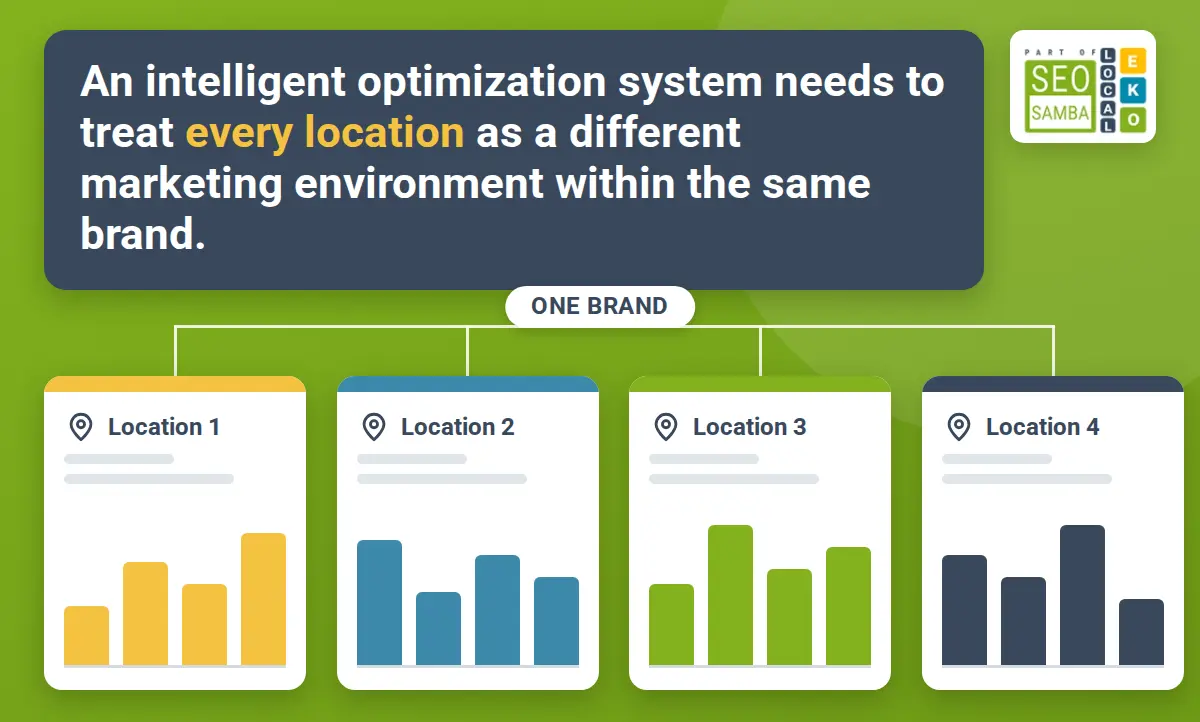
It would be easy to blame AI for this. That would miss the point. An AI model is doing exactly what it has been asked to do. If the instruction is: “Create an SEO-optimized location page for every franchise location using this template.” The predictable outcome is a collection of highly standardized pages. The problem is the optimization model itself. The instruction treats every location as an instance of the same page. An intelligent optimization system needs to treat every location as a different marketing environment within the same brand. That is a much harder problem, and it is where AI becomes genuinely useful.
One brand. Hundreds of local realities.
A franchise needs both sides of the equation.
Corporate needs control over:
- Brand positioning
- Approved terminology
- Products and services
- Brand voice
- Legal and regulatory requirements
- Site architecture
- SEO standards
- AEO strategy
- Structured data standards
The individual location needs to contribute:
- Local services
- Local reviews
- Local customer questions
- Local staff and expertise
- Local areas served
- Local events
- Local promotions
- Local business activity
- Local market characteristics
The challenge is connecting the two. Corporate consistency should establish the boundaries. It should not eliminate local relevance.
AI should analyze locations, not just generate them
This is where the next generation of franchise SEO needs to be different. Instead of starting with: “Generate 500 location pages.” start with: “Analyze 500 locations.”
- What does the existing website say about each location?
- What do customers say in reviews?
- What services are actually generating interest?
- What questions are customers asking?
- What content already exists?
- What search intent is being addressed?
- Where is the location underrepresented?
- Where is content duplicated?
- Which pages overlap?
- What information is missing?
- What makes this location different from the next one?
Only after answering those questions should the system decide what needs to change. Generation should be the output of analysis, not the starting point.
The data is already there
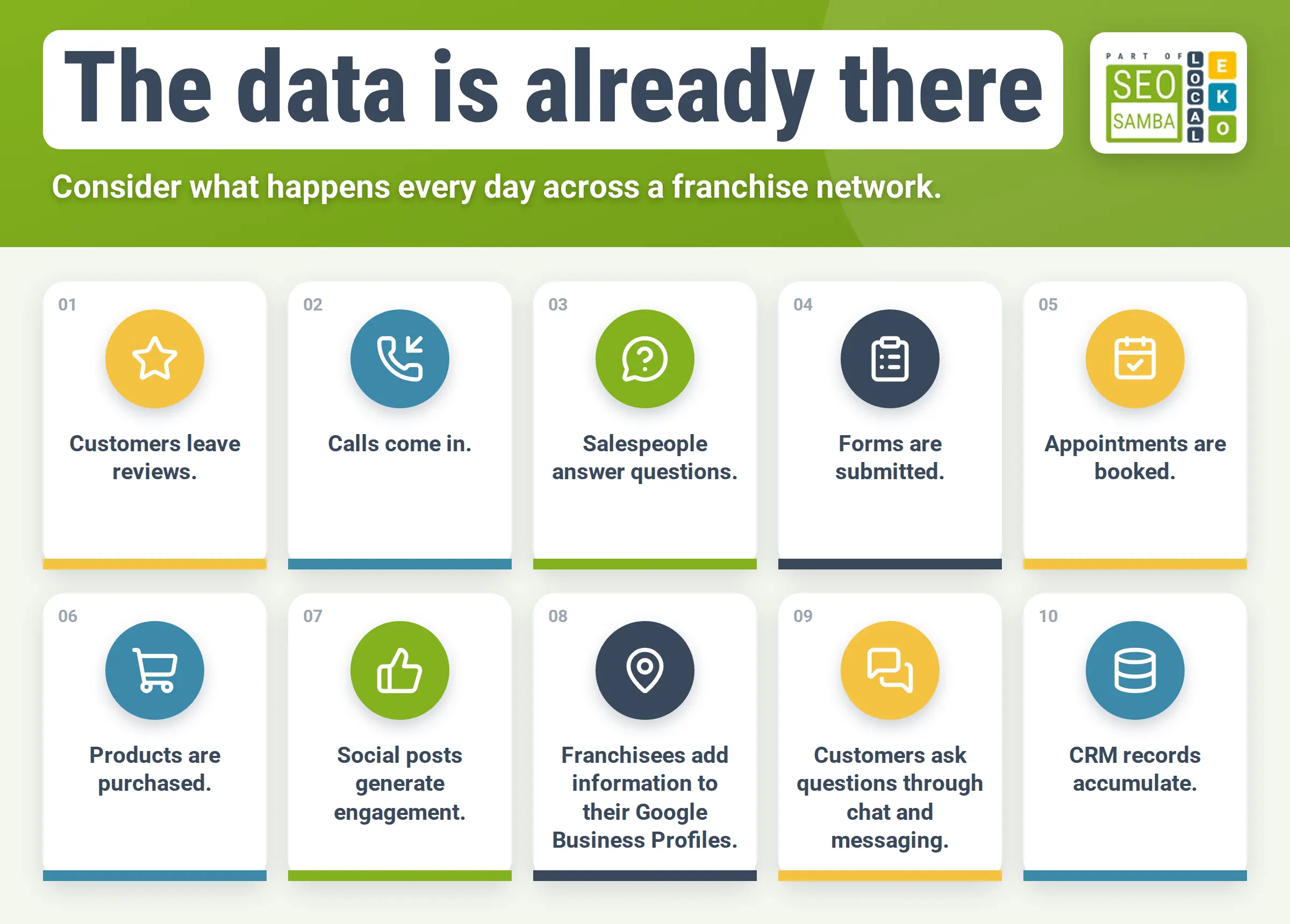
One of the biggest opportunities for franchise brands is that they already generate enormous amounts of local data. It simply isn't traditionally treated as SEO data. Consider what happens every day across a franchise network.
- Customers leave reviews.
- Calls come in.
- Salespeople answer questions.
- Forms are submitted.
- Appointments are booked.
- Products are purchased.
- Social posts generate engagement.
- Franchisees add information to their Google Business Profiles.
- Customers ask questions through chat and messaging.
- CRM records accumulate.
All of this tells the brand something about what customers actually care about in each market. An AI optimization system can use those signals to inform the website. That is much more powerful than asking an AI to invent “local content.”
Reviews can become website intelligence
Take reviews as an example. Suppose a franchise has 300 locations.
- At one location, customers repeatedly mention the speed of installation.
- At another, customers consistently praise the team's expertise with a particular product.
- At another, customers mention serving a specific surrounding community.
- At another, customers repeatedly ask about weekend appointments.
A conventional location-page template sees: Location A, Location B, Location C and Location D.
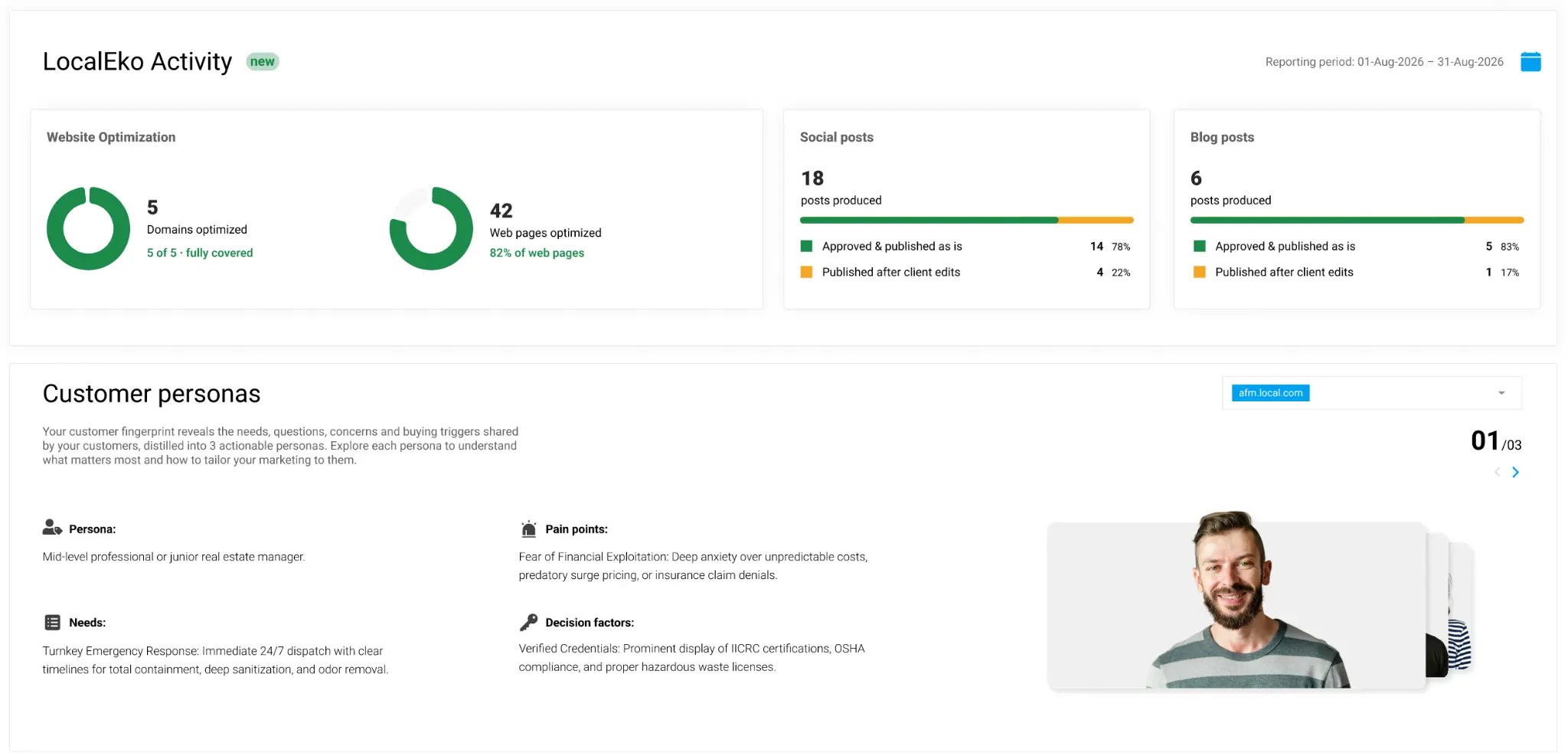
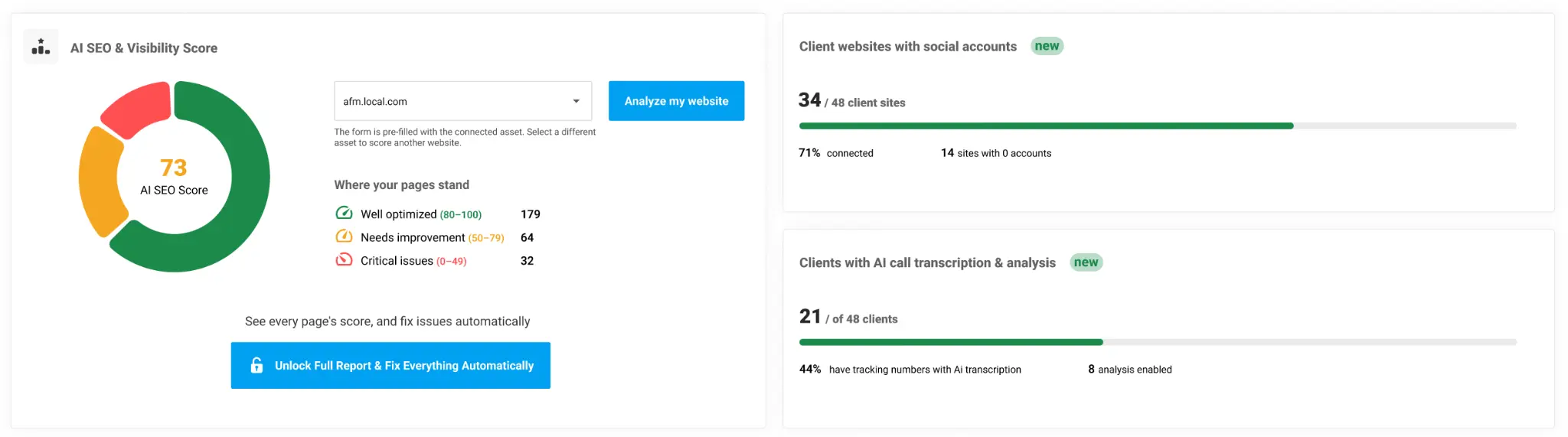
An intelligent optimization system sees four different sources of local positioning. That difference is critical. LocalEko can use signals from reviews, websites, CRM activity, calls and social activity to help identify what is actually relevant to individual locations. The result isn't simply more content. It is more specific content.
The same principle applies to AEO
This becomes even more important as search moves toward generated answers. A traditional search result might match a query against keywords and rank a page. A generative answer system needs to understand what the business is, where it operates, what it offers and why it is relevant to a particular question. For a multi-location brand, that means the system needs to understand the relationship between:
Brand → Location → Service → Market → Customer need
A generic location page doesn't necessarily communicate those relationships particularly well. A genuinely localized page can. That makes structured data, location information, content and business signals increasingly important parts of the same optimization problem. The objective isn't simply to produce more pages. It is to make the business more understandable.
One strategy. Hundreds of decisions.
This is the fundamental shift. A franchise shouldn't need 500 independent SEO strategies. But it also shouldn't have one SEO strategy mechanically copied 500 times. The right architecture sits between those extremes.
- One corporate strategy.
- One set of optimization rules.
- Hundreds of local analyses.
- Thousands of page-level decisions.
That's where AI can create genuine leverage.
- Corporate defines the framework.
- AI analyzes each location.
- The system identifies opportunities.
- Local signals inform the optimization.
- Changes are applied consistently.
And the organization retains visibility and control over what happens.
The role of the franchisee changes too
There is another important consequence. AI should not mean giving every franchisee another marketing dashboard. Most franchisees didn't get into business to become SEO specialists. They shouldn't have to understand canonical tags, schema markup, H1 structures or AEO. Their role is to operate the local business and provide local knowledge. The system can turn that activity into marketing intelligence.
- A new review becomes a signal.
- A recurring customer question becomes a content opportunity.
- A new service becomes an optimization opportunity.
- A change in opening hours becomes a website update.
- A new local promotion becomes a relevant local signal.
The business generates the data. AI turns the data into marketing activity. That is a much more natural model for franchise marketing.
What this means for corporate marketing teams
For corporate marketing, the attraction is obvious. Instead of trying to centrally manage hundreds of local websites manually, the team establishes the strategic framework.
It can define:
- What the brand should be known for
- How services should be described
- Which SEO rules should apply
- Which elements require corporate approval
- What franchisees can customize
- What must remain consistent
The optimization system then works within those boundaries. This creates something traditional franchise SEO has struggled to deliver: centralized intelligence without centralized manual execution.
What this means for franchisees
For the franchisee, the experience can be almost invisible.
- They don't need to become an SEO expert.
- They don't need to write monthly blog posts.
- They don't need to understand JSON-LD.
- They don't need to figure out which page should target which query.
- They run their business.
Their customer interactions, reviews, calls and other local signals help inform the marketing system, and the website continuously becomes more relevant to their market. Done-for-you local optimization is ultimately more valuable than another local marketing dashboard.
Don't optimize every location the same way
There is a deceptively simple principle behind all of this: if every location receives exactly the same optimization, you probably aren't optimizing the locations. You're optimizing the template.
That distinction becomes increasingly important as AI makes content generation almost free. When content was expensive, brands worried about producing enough. When AI makes content abundant, the problem changes. The scarce resource becomes relevance.
- Which information matters?
- Which pages deserve attention?
- Which location has a unique opportunity?
- Which content should be added?
- Which content should be removed?
- Which page should be left alone?
And which optimization will actually make the website more useful to a customer? AI can help answer those questions, but only if the system is designed to analyze rather than blindly generate.
LocalEko: scaling local intelligence
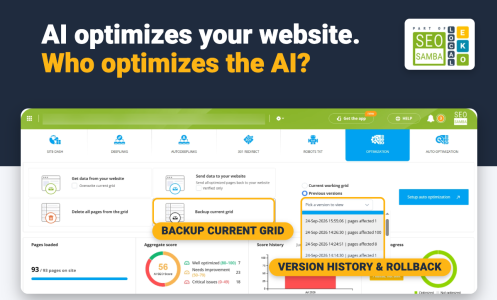
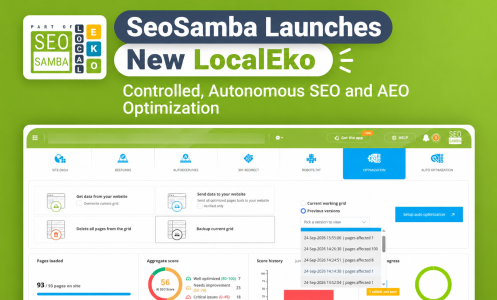
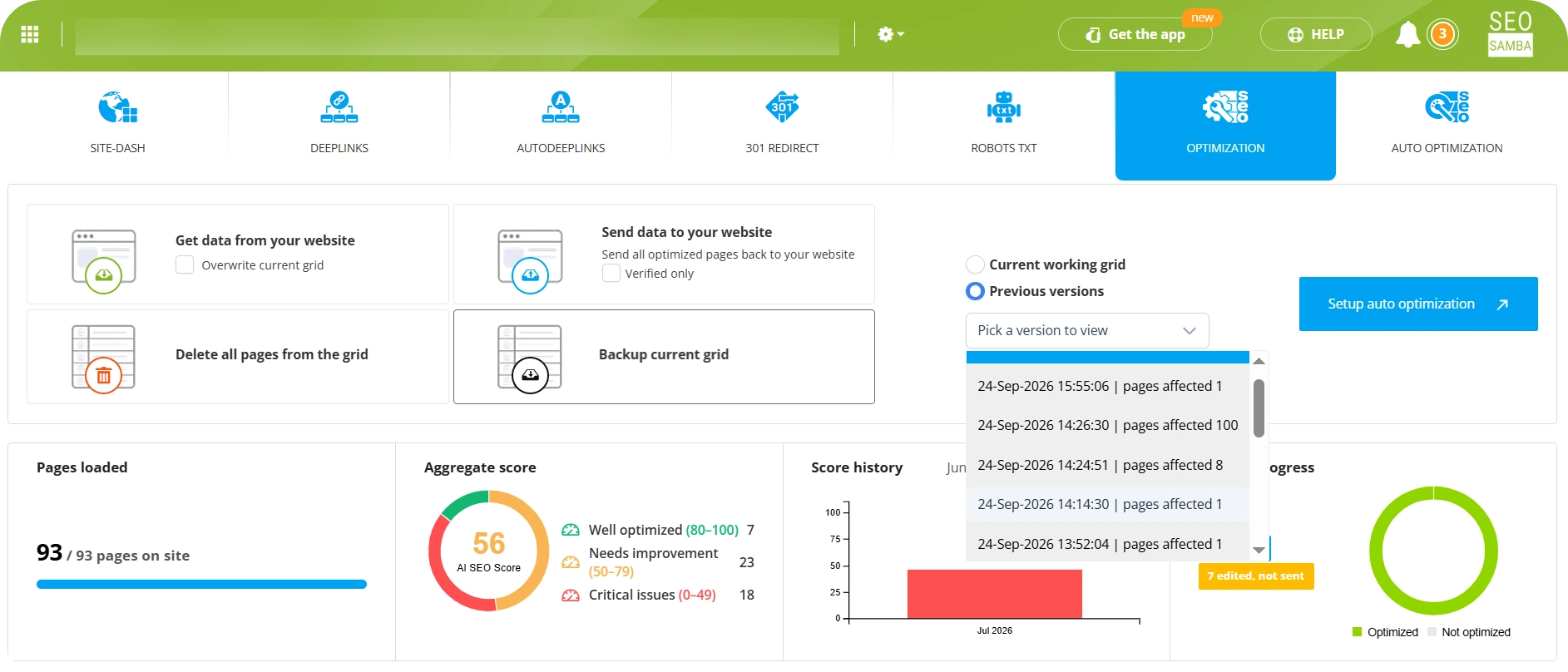
This is the thinking behind SeoSamba's LocalEko. LocalEko is designed for brands that need to manage SEO and AEO across many locations without turning every location into a copy of the next one. Corporate positioning and optimization rules establish the baseline. LocalEko then analyzes pages individually. It can incorporate signals from the website, reviews, CRM, calls and social activity to understand what is happening at the local level. It can then optimize elements including titles, meta descriptions, URLs, headings, content and structured data according to the context of each page and location. And because the system is purpose-built for optimization, changes can be tracked, reviewed and reverted rather than disappearing into an opaque AI workflow. The objective isn't to generate 500 pages. It is to make 500 locations more relevant.
The next generation of franchise SEO
- The first generation of franchise SEO was about getting every location online.
- The second was about getting every location consistent.
- The next generation needs to be about making every location understandable, relevant and continuously optimized.
AI finally makes that possible at the scale of a national or global franchise network. But only if brands resist the temptation to confuse automation with duplication. The winning franchise website won't necessarily be the one with the most AI-generated pages. It will be the one where AI understands the difference between the locations. Because a franchise may have one brand. It may have one marketing strategy. It may even have one website platform. But it doesn't have one market. It has hundreds, or thousands, of local businesses serving different communities. AI should make those differences easier to manage. Not erase them.
One brand. One strategy. Hundreds of local decisions.
That's the promise of autonomous local optimization.