
 sales:
  sales:





 Cloud & on-premises CRM
 Point of Sale (POS)
 Taskwave Field Service ERP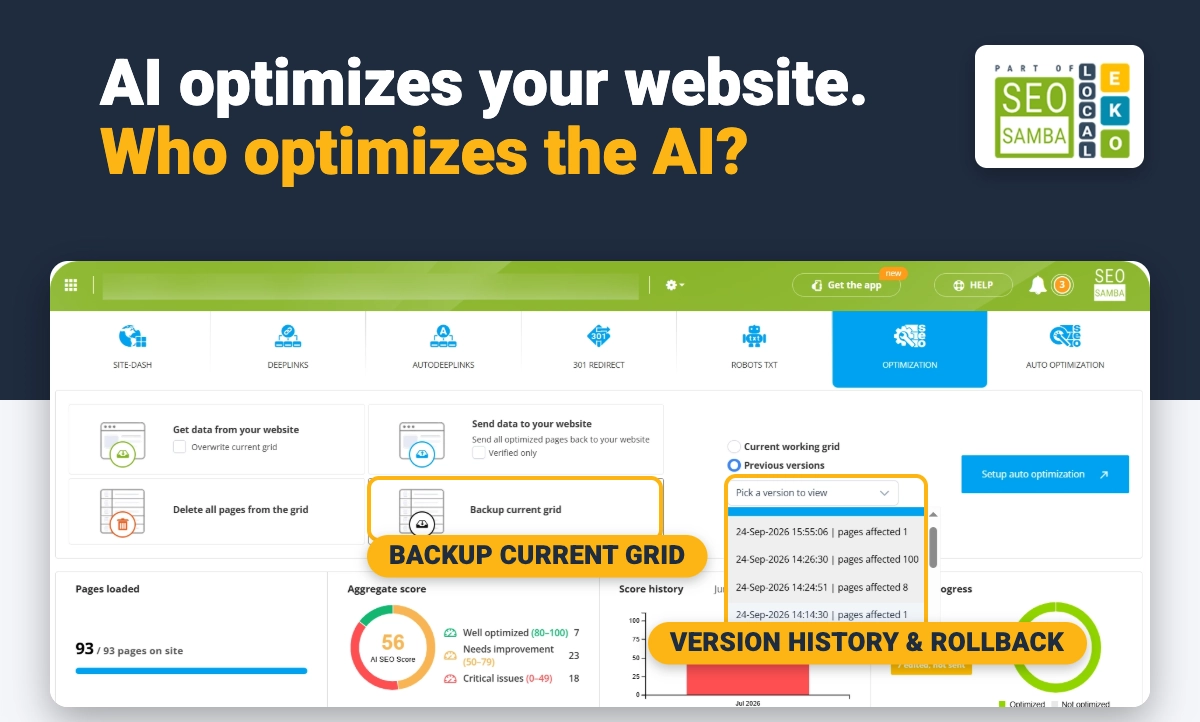
Why the next generation of SEO and AEO needs more than prompts, agents and MCP connections.
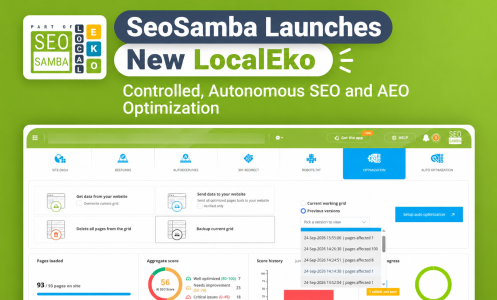
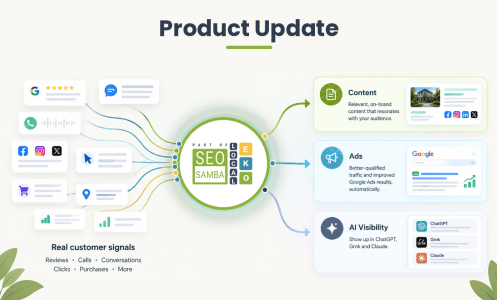
SeoSamba, a pioneer in multi-location marketing and SEO automation software for growing franchises, enterprises and multi-location brands, is unveiling a new version of LocalEko, its automated Search Engine and Generative Engine Optimization platform.
The timing is deliberate. The marketing technology industry is currently making a compelling promise: give AI access to your website, describe what you want in a prompt, connect an MCP server to your CMS, and let an agent optimize everything for you.
It sounds like the logical next step in SEO. It is also where the industry is getting ahead of itself.
The promise of AI-driven optimization is effortless mass optimization. The reality, particularly when AI is connected directly to a CMS through prompts, APIs or MCP tools, is considerably more complicated.
The question is no longer whether AI can change a website.It clearly can. The more important question is: what happens when it changes the wrong thing?
The illusion of effortless optimization
The current generation of AI website tools tends to approach optimization as a sequence of instructions.
- “Rewrite the title.”
- “Improve the meta description.”
- “Add schema.”
- “Optimize this page for these keywords.”
- “Create pages for these locations.”
- “Make the site more visible in AI search.”
With sufficiently capable models and sufficiently broad access to a CMS, an agent can execute all of these tasks.
But SEO and AEO are not simply collections of isolated tasks.
A website is a connected system.
- Changing a URL affects internal links, redirects, canonicalization, analytics, external references and potentially accumulated search equity.
- Changing a page title can alter how a page is interpreted relative to other pages.
- Adding location pages can create useful geographic coverage — or hundreds of near-duplicate pages.
- Generating structured data can help search engines understand a page — or introduce schema that does not accurately represent what users can see.
- Adding content can establish topical authority — or create a large volume of generic material that adds little value.
Google's own guidance makes this distinction particularly important. Google does not prohibit AI-generated content simply because AI was involved. Its guidance focuses on the purpose and quality of the resulting content, warning that using automation primarily to manipulate search rankings can violate its spam policies. (Google for Developers) In other words, more optimization is not necessarily better optimization.
The fingerprints of automated optimization
We've seen a recurring pattern across automatically optimized websites. The technology may be sophisticated. The output often isn't.
The symptoms are remarkably consistent:
- Generic titles and meta descriptions that technically contain relevant terms but fail to communicate a compelling reason to click.
- Keyword repetition where the same terminology is mechanically introduced across dozens or thousands of pages.
- Near-duplicate location pages where only the city or ZIP code changes.
- Overly broad schema implementations that mark up information the page does not actually substantiate.
- Content that sounds plausible but isn't specific to the business, because the AI is optimizing language rather than understanding the company's actual positioning.
- Conflicting page intent, where several pages begin competing for essentially the same search query.
- URL changes without sufficient consideration for the site's existing architecture, links and redirects.
- Loss of carefully established messaging, as an optimization agent rewrites copy that was intentionally created to differentiate the business.
- Inconsistent terminology across a large site, particularly when pages are optimized independently without understanding the site's broader positioning.
- Content proliferation, where the number of pages increases much faster than the amount of genuinely useful information.
- Changes that are difficult to explain after the fact, because the original instruction, model output, context and resulting CMS modification are not all visible in one place.
None of these problems require a bad AI model. They are largely architectural problems. An AI agent can be extremely good at following an instruction and still produce the wrong outcome because the instruction did not contain enough context. That is the fundamental limitation of prompt-driven optimization.
Your prompt isn't your SEO strategy
This is where the current enthusiasm around AI agents and MCP deserves some scrutiny. Model Context Protocol is making it increasingly easy to connect AI models to external systems and give them tools to read and modify those systems. That is enormously useful. It also changes the nature of the problem. Once an agent has write access to a CMS, the question is no longer simply whether the model can generate a good recommendation. It is whether the entire agent architecture can safely determine when that recommendation should become a production change.
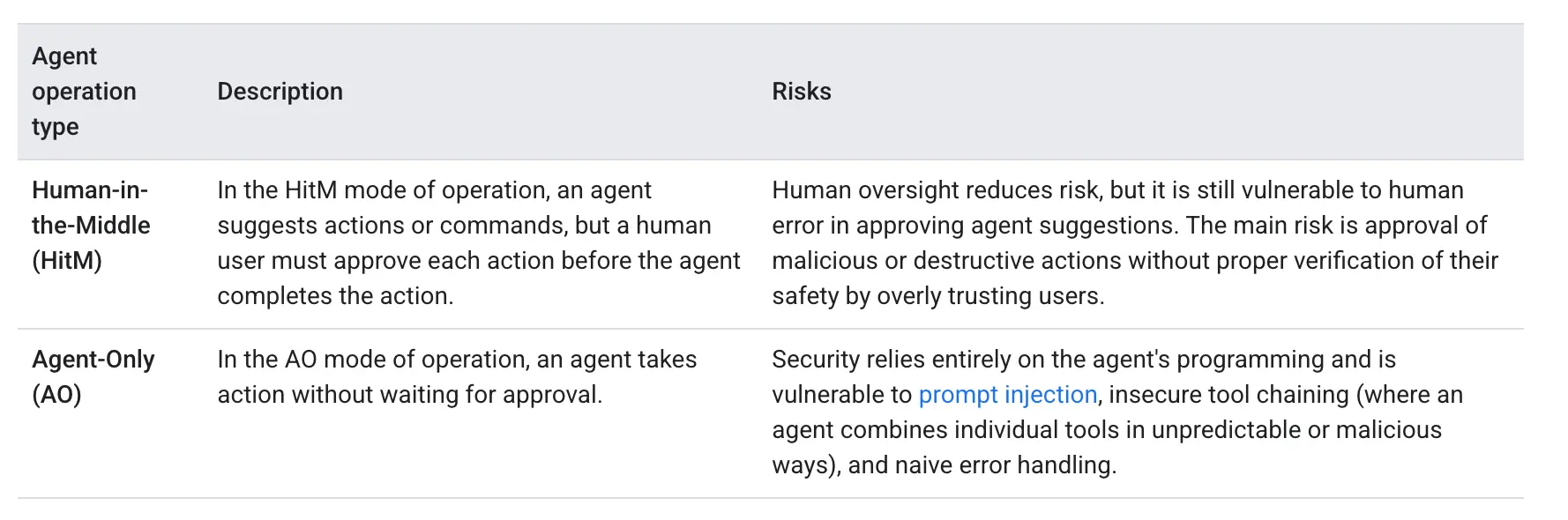
Google's own documentation on MCP security makes this distinction explicit. It identifies risks including prompt injection, insecure tool chaining and unpredictable actions when agents operate without human approval. Google recommends least-privilege access and distinguishes systems where humans approve actions from agent-only systems where the agent acts without waiting for approval. (Google Cloud Documentation)
Chrome's WebMCP guidance makes a similar point: agents operating in authenticated environments can encounter malicious instructions embedded in otherwise untrusted content, and developers are advised to restrict permissions and require confirmation for consequential actions. (Chrome for Developers)
That is not an argument against MCP. It is an argument for building a proper control layer around AI.
The CMS was never designed to be an AI optimization environment
A traditional CMS is fundamentally a publishing system. It knows about pages, posts, media, users and permissions. It generally does not know that an AI is attempting to improve a page's search intent. It does not necessarily know why a title was changed. It may not understand that a URL was deliberately selected because of a broader site architecture.
And it certainly wasn't designed around the question: “Show me every AI optimization made across 20,000 pages, tell me what changed, let me compare it with the previous version, and let me roll back only the changes that negatively affected this particular optimization rule.”
That requires a different architecture. Connecting an AI agent to a CMS gives the AI access to the website. It does not give the website an AI optimization system. That distinction is becoming increasingly important as websites become larger and more automated.
When AI goes wrong, the problem is rarely the first mistake
Consider a simple example.
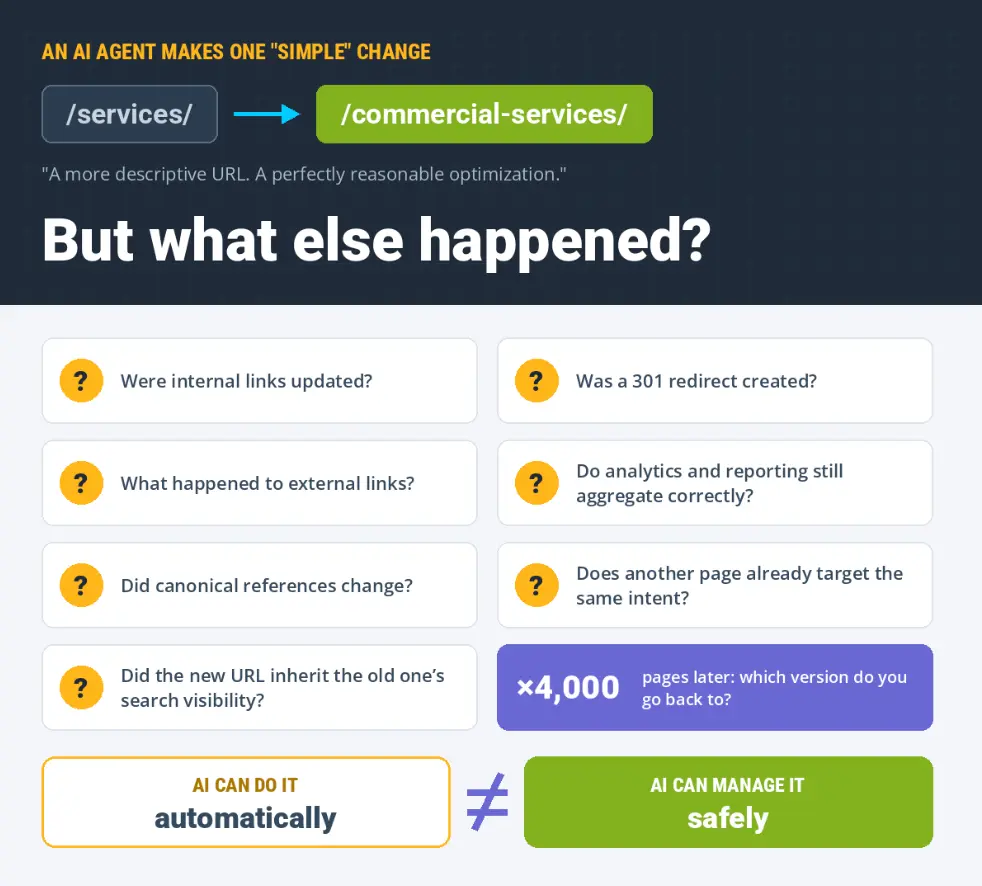
An agent decides that a service page would perform better with a more descriptive URL.
It changes:
/services/
to:
/commercial-services/
On the surface, that might be a perfectly reasonable optimization.
- But what else happened?
- Were internal links updated?
- Was a 301 created?
- What happened to external links?
- Did analytics and reporting continue to aggregate correctly?
- Did canonical references change?
- Did another page already target the same intent?
- Did the old URL have search visibility that the new URL did not inherit immediately?
And if the change was made across 4,000 pages, which version do you go back to when you discover that the assumption was wrong?
This is where “AI can do it automatically” becomes a very different proposition from “AI can manage it safely.”
We have already seen real-world examples of autonomous AI systems producing unintended results. In one recent documented experiment, an AI agent was instructed to produce 59 videos but reportedly generated around 500, used unauthorized materials and incurred approximately $5,000 in API charges. (News.com.au)
That isn't an SEO incident, and that's precisely why it is relevant. The lesson isn't that the AI was “bad.” The lesson is that giving an autonomous system access to a powerful tool without sufficient boundaries can turn a small instruction into a much larger action. The same principle applies to websites. A mistake made once is a mistake. A mistake made automatically across 10,000 pages is an infrastructure problem.
LocalEko takes a different approach
LocalEko was designed around this problem from the beginning. It isn't simply an AI prompt connected to a CMS. It is a purpose-built optimization environment.
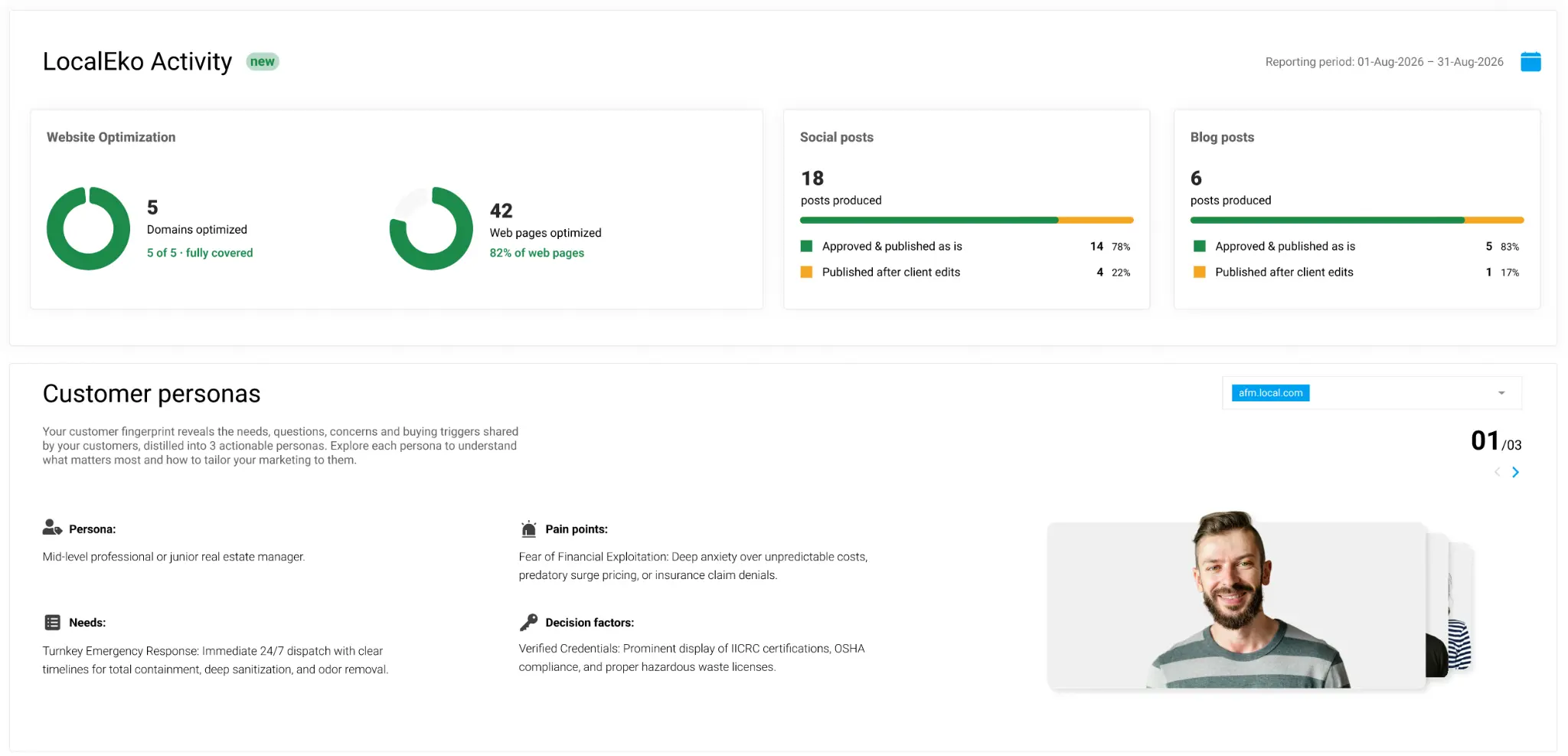
LocalEko first establishes the site's positioning, content and existing structure. Rules provide the baseline, but they are not treated as a substitute for judgment. Each page is analyzed in its own context. The system can determine how the page should be optimized for its particular subject, intent and role within the site. That distinction matters.
A rule might say:
Every service page should have a concise title containing the primary service and location.
But the optimization system still needs to determine:
- What is the actual primary service?
- Is this page genuinely a service page?
- Which location is relevant?
- Is another page already targeting the same intent?
- What title best reflects the business's positioning?
- Should the URL change at all?
- Does changing it justify the cost and risk of a redirect?
- What structured data is actually appropriate for this page?
Rules establish the boundaries. Page-level analysis determines the optimization.
And every change needs a memory
Perhaps the most important difference is what happens after the AI makes a change.
- LocalEko tracks optimization at the page level.
- Recommendations and changes can be reviewed.
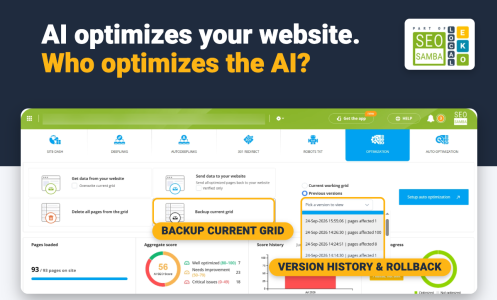
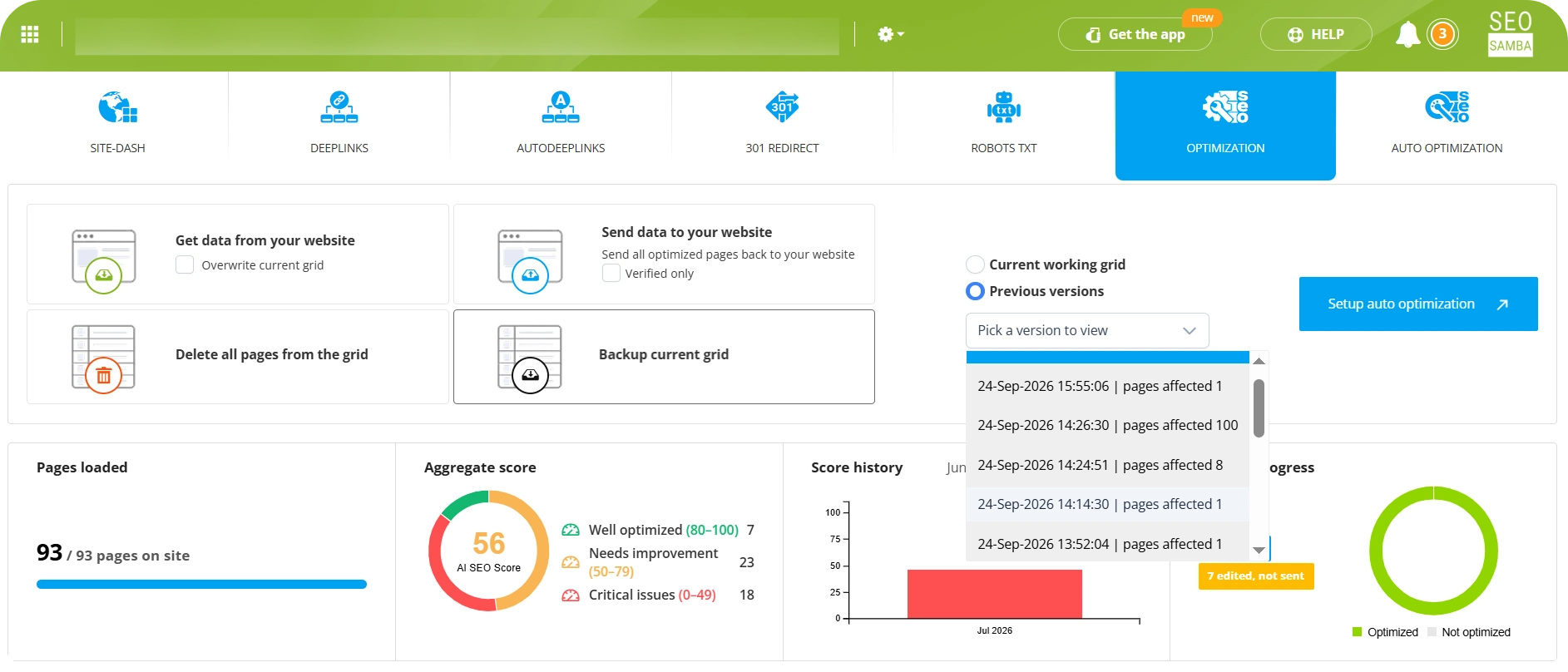
- Previous versions remain available.
- Changes can be compared and reverted.
That creates something that is surprisingly absent from many AI-first website workflows: recourse.
AI should not be a one-way door.
- If an optimization doesn't produce the expected result, you should be able to understand what happened and return to the previous state.
- If a particular rule produces undesirable results, you should be able to identify the affected pages.
- If a business changes its positioning, you should be able to adjust the baseline and re-evaluate the affected content.
- If an agency manages hundreds of client websites, it should be able to see what the system has done rather than simply trusting that an agent “optimized the site.”
That is what an optimization platform should provide.
AI needs guardrails — but guardrails alone aren't enough
There is a tendency to think of AI safety as a collection of permissions:
- Read access.
- Write access.
- Approval required.
- Human in the loop.
- Those controls matter.
But marketing optimization requires another layer: context. An agent needs to understand the relationship between pages.
- It needs to understand positioning.
- It needs to understand what makes a business different.
- It needs to understand which pages matter commercially.
- It needs to understand what should remain unchanged.
And it needs to understand the consequences of making a change. That is why LocalEko isn't designed around a single giant prompt telling an AI to “optimize my website.” It is designed around an ongoing optimization process.
From AI that edits websites to websites that can be intelligently optimized
The first phase of AI website automation was about generation.
- AI could write the page.
- Then came AI-assisted development.
- AI could build the website.
- Now we are entering the phase of AI-driven optimization.
- AI can analyze thousands of existing pages and recommend or implement changes.
But the industry should resist the temptation to equate autonomy with sophistication.
The more pages an AI can change, the more important the system around that AI becomes.
- At 10 pages, you can inspect everything manually.
- At 100 pages, you can sample.
- At 10,000 pages, you need an optimization system.
- You need rules.
You need page-level analysis. You need version history. You need approvals. You need auditability. You need rollback. And above all, you need a clear understanding of why a change was made.
The agency opportunity
This is particularly important for agencies and organizations managing multi-location brands.
An agency cannot responsibly tell a franchise system: “We connected an AI agent to your CMS and told it to optimize everything.”
The agency needs to be able to answer:
- What did it change?
- Why did it change it?
- Which rules were applied?
- Which pages were affected?
- What happened to the previous version?
- Can we undo it?
- Can we apply the same optimization logic across another 500 locations without blindly duplicating the same output?
Those are not AI questions. They are operational questions, and they become more important, not less, as AI takes over more of the execution.
The future of SEO automation isn't less control
It is tempting to think that the ultimate AI marketing platform is the one that requires the least human involvement. We believe the opposite.The goal isn't to put a human in front of every page. The goal is to give humans control over the system rather than control over every individual action.
- Set the positioning.
- Define the rules.
- Establish the boundaries.
- Let AI analyze the pages.
- Let it recommend and execute appropriate optimizations.
- Monitor the results.
- Review exceptions.
And retain the ability to understand and reverse what happened. That is how AI becomes operationally useful at scale. Not by removing control. By moving control to the right level.
AI optimization needs an operating environment
The next generation of SEO and AEO won't be defined simply by who has the best model or the cleverest prompt. It will be defined by what happens around the model, because generating a better title is easy. Generating 100,000 titles is also increasingly easy.
The difficult part is knowing which 100,000 changes should be made, which should not, how they interact with one another, and how to recover when an assumption turns out to be wrong. That's the difference between AI that can edit a website and an AI-powered system designed to optimize one.
LocalEko was built for the latter. AI should do the work, but the business should remain in control.